In 1978 the rainbow flag had eight stripes. Hot pink did not survive the first production run. Not for political reasons, but because the fabric could not be sourced at scale.
Gilbert Baker sewed the first rainbow flag in 1978. Eight colours, each with a meaning.
When the flag went into production, hot pink disappeared. Nobody objected to the colour. The fabric simply was not available in the quantities needed.
So the most recognisable symbol of the last fifty years is missing a stripe because of a textile problem.
Material was part of this story from day one. And then, for roughly five decades, nobody thought about it again.
The Problem: A Promise Made of Plastic
Most flags say something simple. This is where I live. This is who governs here.
The Pride flag does something else. It says you are safe here. It is a promise that we look after each other.
And we mass produce that promise in cheap polyester that fades and then outlives everyone who marched under it.
That is a contradiction worth fixing.
The Rainbow Is the Hardest Test in the Business
Ask any flag maker which colour gives them the most trouble outdoors. The answer is almost always red.
Sun fades a cheap rainbow flag, and red drifts to pink.
A flag about being seen becomes literally harder to see.
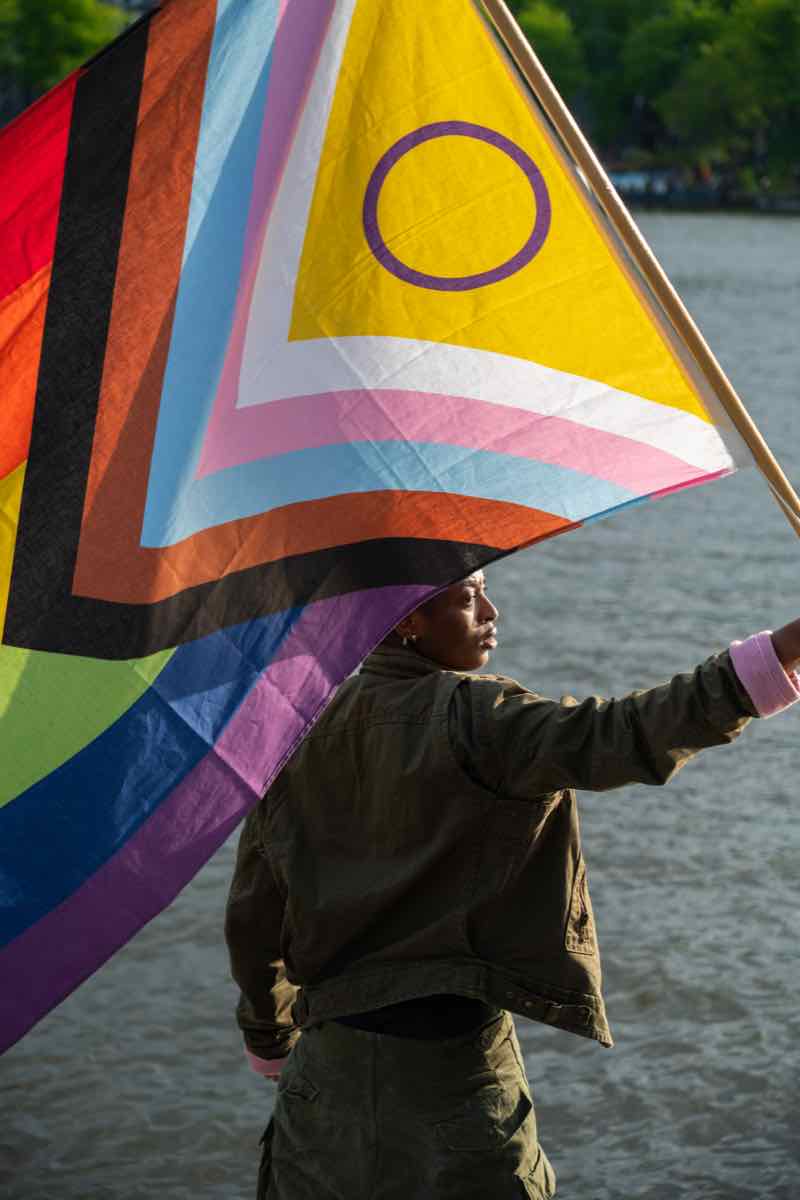
Hemptex® is printed with pigment inks, which give it a matte, deep colour.
Where It Goes Next
Pride flags have brutally short working lives. A month on the pole. Sometimes a single parade.
Then most of them go in the bin.
And here is the part almost nobody thinks about. While that flag is flying, it is shedding. Every gust pulls fibres loose. Synthetic textiles shed microplastic fibres, and a flag is a piece of synthetic textile that we deliberately hang outside, in the wind, in the rain, in full sun, for as long as we can.
Polyester does not break down. It breaks up. Into pieces small enough to end up in the canal, the sea, and eventually in us.
We call it environmental confetti. A symbol of care for people, quietly littering the place those people live.
That is why we started Better Flags.
The Fix: Two Materials, One Idea
Hemptex®
The textile of the world's first hemp flag, made in 2019: 55% hemp, 45% cotton, no polyester. Printed and finished in the Netherlands at Hollanders Printing Solutions, who make it possible to print double sided with pigment on hemp textile.
More about hemp flags.
CiCLO® Textiles
A polyester that biodegrades in a natural environment: CiCLO® polyester biodegraded 90 to 94% in independent ASTM lab tests, after 952 to 1,362 days. How cool is that.
More about biodegradable flags.
Two very different materials.
Which Flag Material Is Actually the Most Sustainable?
Here is the honest comparison, including the option most suppliers will try to sell you as the green choice.
| Flag material | Made from | Sheds microplastics | Biodegrades |
|---|---|---|---|
| Standard polyester | Virgin fossil oil | Yes | No |
| rPET, recycled polyester | Recycled bottles | Yes | No |
| CiCLO® | Polyester with a biodegradable additive | Fragments biodegrade | 90 to 94% in ASTM lab tests |
| Hemptex® | Hemp plant fibre | No plastic fibres to shed | Natural fibres; the finished flag is not tested |
Recycled polyester reuses a bottle once. It does not stop the flag shedding, and it does not biodegrade at the end. That is why we do not sell it on its own: depending on the cloth, our CiCLO® polyester is made from recycled PET or from new polyester, and the additive is what lets its fibres biodegrade.
We took that comparison apart in detail in rPET versus CiCLO.
The Flag Keeps Evolving. The Fabric Should Too.
Eight stripes in 1978. Then six.
In 2018 Daniel Quasar added the chevron, bringing in people of colour and the trans community.
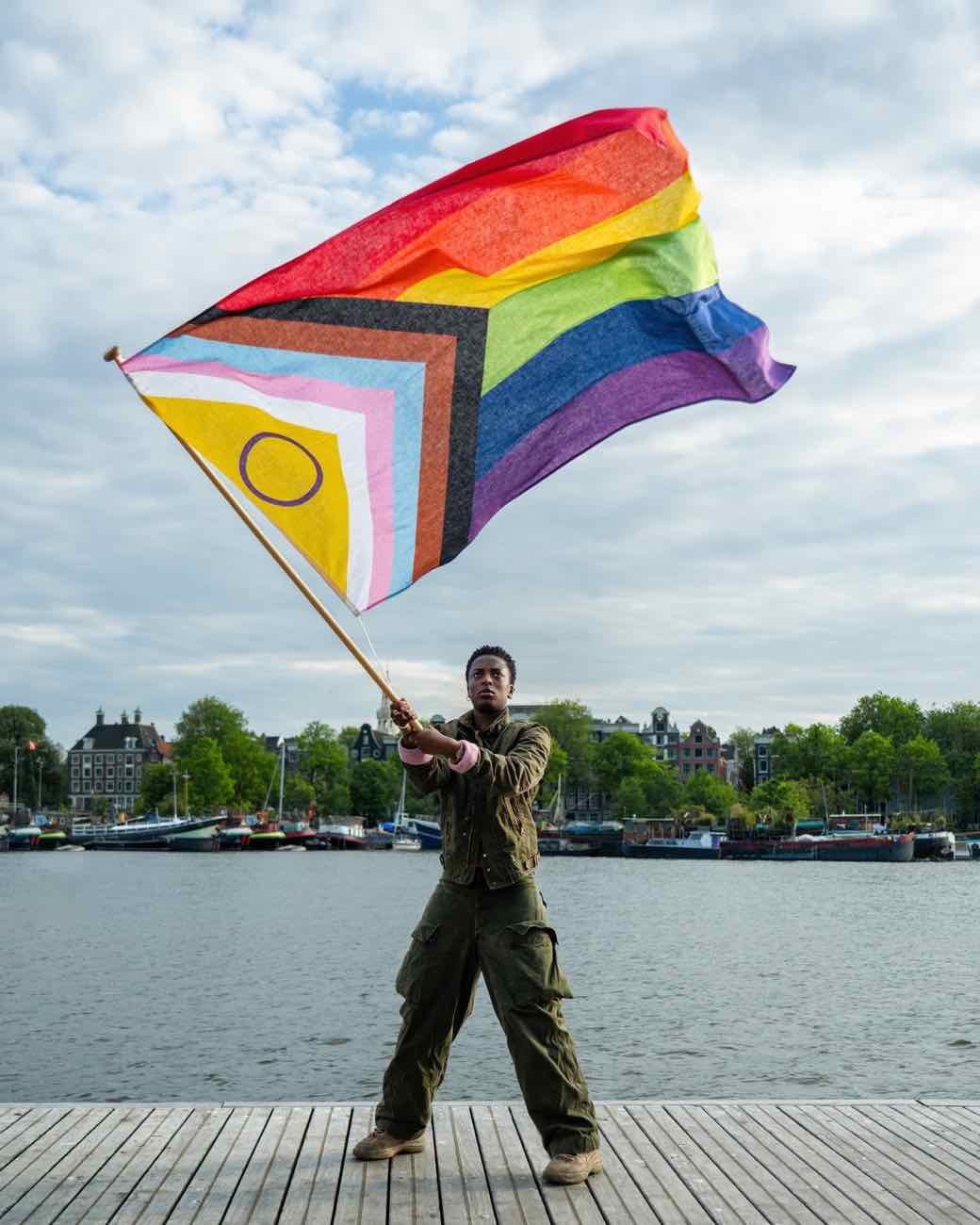
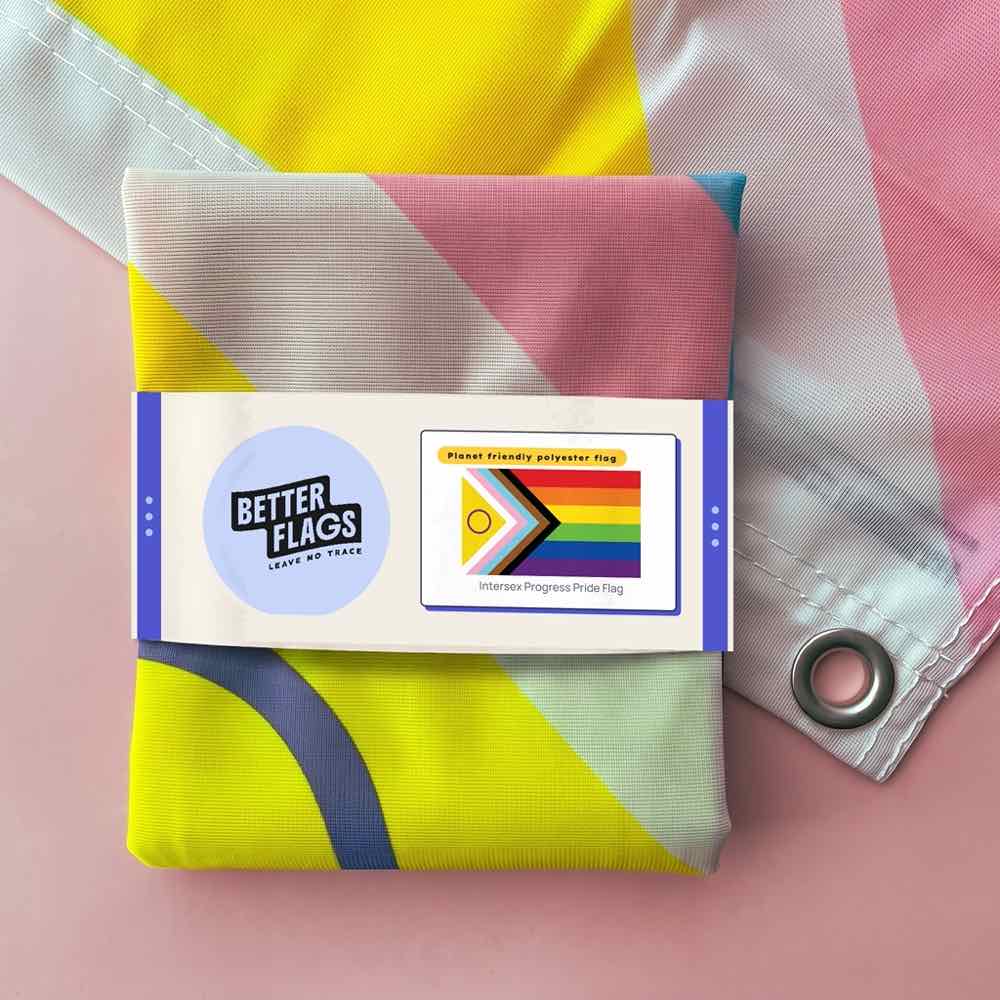
In 2021 Valentino Vecchietti added the intersex circle, the symbol Morgan Carpenter designed in 2013.
This flag is never finished. It gets redrawn every time the movement decides more people belong inside it.
A symbol that keeps improving deserves a fabric that does the same.
Redesigning the flag to include more people, then printing it on a material that pollutes the world those people live in, misses the point by a wide margin.
Sustainable Pride Flags: Common Questions
What is a sustainable Pride flag?
A sustainable Pride flag is made from a material that does not persist as plastic the way conventional polyester does. In practice that means either a natural fibre such as hemp, or a polyester engineered to biodegrade, such as CiCLO® (CiCLO® polyester biodegraded 90 to 94% in independent ASTM lab tests, after 952 to 1,362 days). A standard polyester Pride flag is not sustainable, because it sheds microplastics the entire time it flies and does not break down afterwards.
What is a biobased Pride flag?
A biobased Pride flag is made from fibre grown as a plant rather than refined from oil. Better Flags makes Pride flags from Hemptex®: 55% hemp, 45% cotton, no polyester.
What is a CiCLO® flag?
A CiCLO® flag is made from polyester that contains a biodegradable additive. The additive lets the fibre break down in a natural environment instead of persisting as microplastic: CiCLO® polyester biodegraded 90 to 94% in independent ASTM lab tests, after 952 to 1,362 days. You get the performance of polyester without the permanent pollution.
Is a recycled polyester (rPET) Pride flag sustainable?
Not on its own. Plain rPET reuses a plastic bottle once, but the resulting flag still sheds microplastics while it flies and still does not biodegrade at the end of its life. Recycling delays the problem, it does not solve it.
What is the most sustainable flag material?
It depends on what the flag has to do. Hemp is a natural fibre, so a Hemptex® flag has no plastic fibres to shed. Where polyester performance is genuinely required, choose CiCLO®, the polyester made to biodegrade.
Do flags really shed microplastics?
Yes. Synthetic textiles shed microplastic fibres, and a flag is a piece of synthetic textile deliberately hung outdoors in wind, rain and full sun for as long as possible. Every gust pulls fibres loose. We call the result environmental confetti.
How long does a hemp Pride flag last outdoors?
How long a flag lasts depends on wind, sun and how often it flies. Colour is usually what goes first, and red is the colour to watch: exactly the one a rainbow flag cannot afford to lose.
Show Your Colours
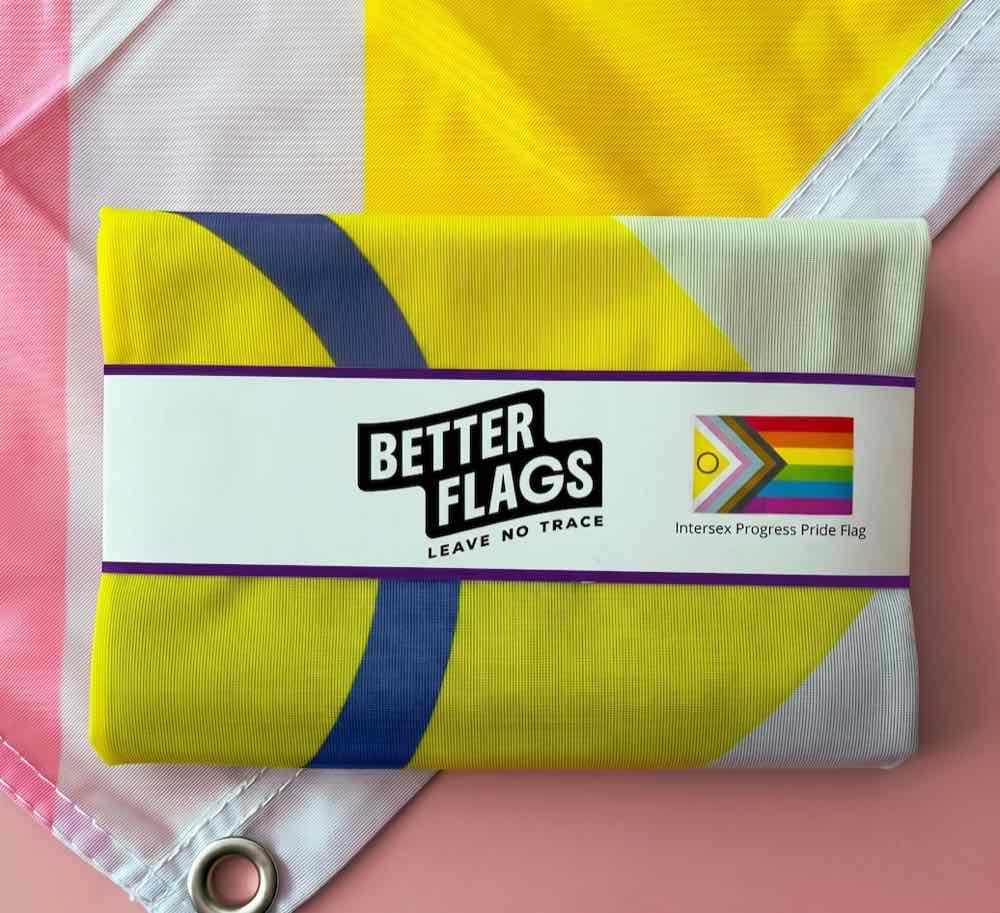
We made the Intersex Progress Pride flag the way it should be made.
Ready to fly a flag you can actually be proud of?
Order yours today