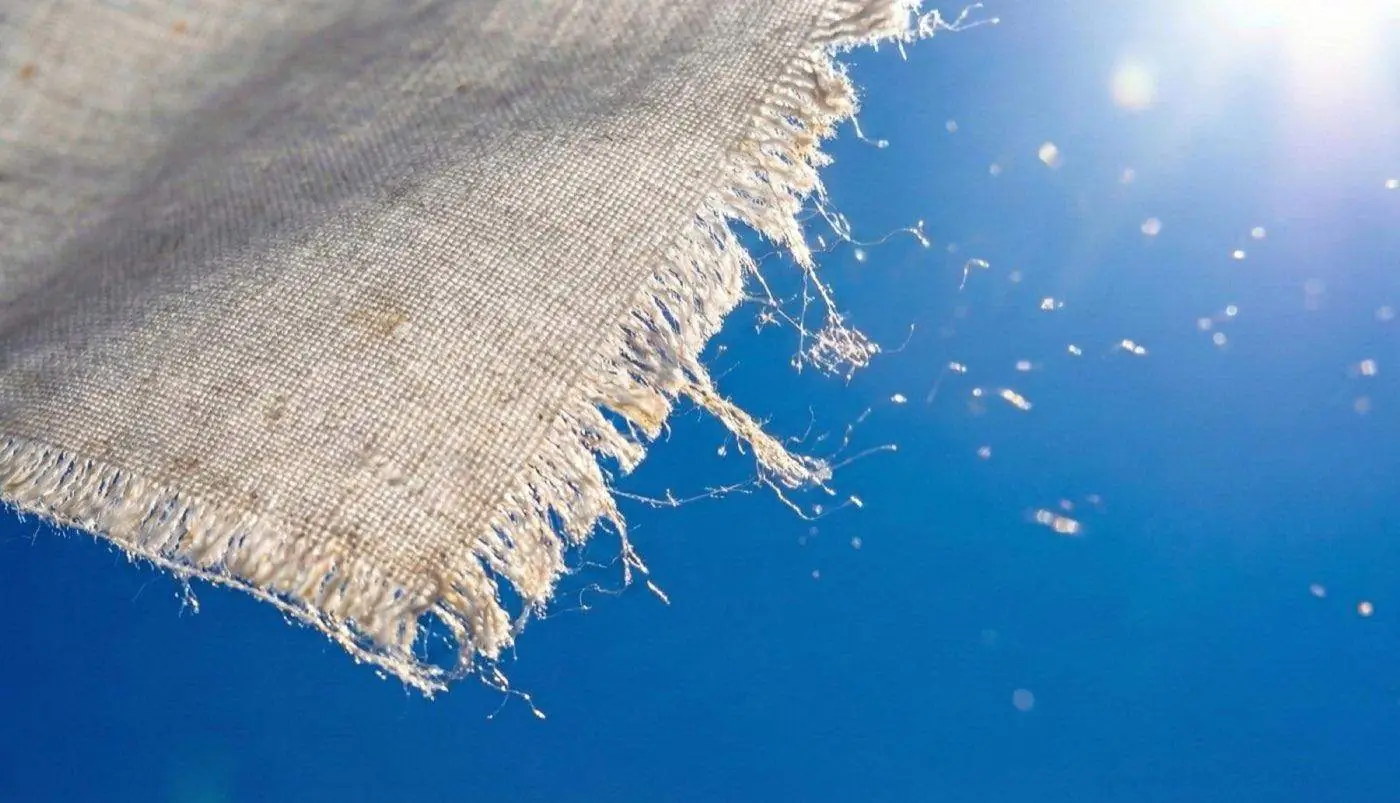
A PET flag is a polyester flag. Sold as PET or rPET, it is usually made from recycled drinks bottles. Recycling saves energy and CO2 when the fibre is made. It doesn't change what the flag sheds while it flies: polyester fibres, a plastic that barely broke down in lab tests. For that, the material itself has to change.
Key facts
- 40 to 85%
less non-renewable energy to make fibre from recycled PET bottles than new PET fibre, and 25 to 75% less greenhouse gas, depending on the calculation method (Shen et al. 2010).
- 2.3×
as many fibres from recycled polyester fabric as from new polyester fabric in one washing study; 1,193 against 908 in another (Özkan & Gündoğdu 2021; Akyildiz et al. 2024).
- 0 to 6.2%
Untreated polyester biodegraded that little in ASTM lab tests of 952 to 1,362 days; CiCLO® polyester 90 to 94.2% (CiCLO®).
- Under 1%
of textile waste worldwide is recycled into new textiles (European Commission 2022).
01What is a PET flag?
PET is short for polyethylene terephthalate: the clear plastic of a drinks bottle. Spun into fibre, PET is the polyester in most flag cloth. So chemically, almost every polyester flag is a PET flag.
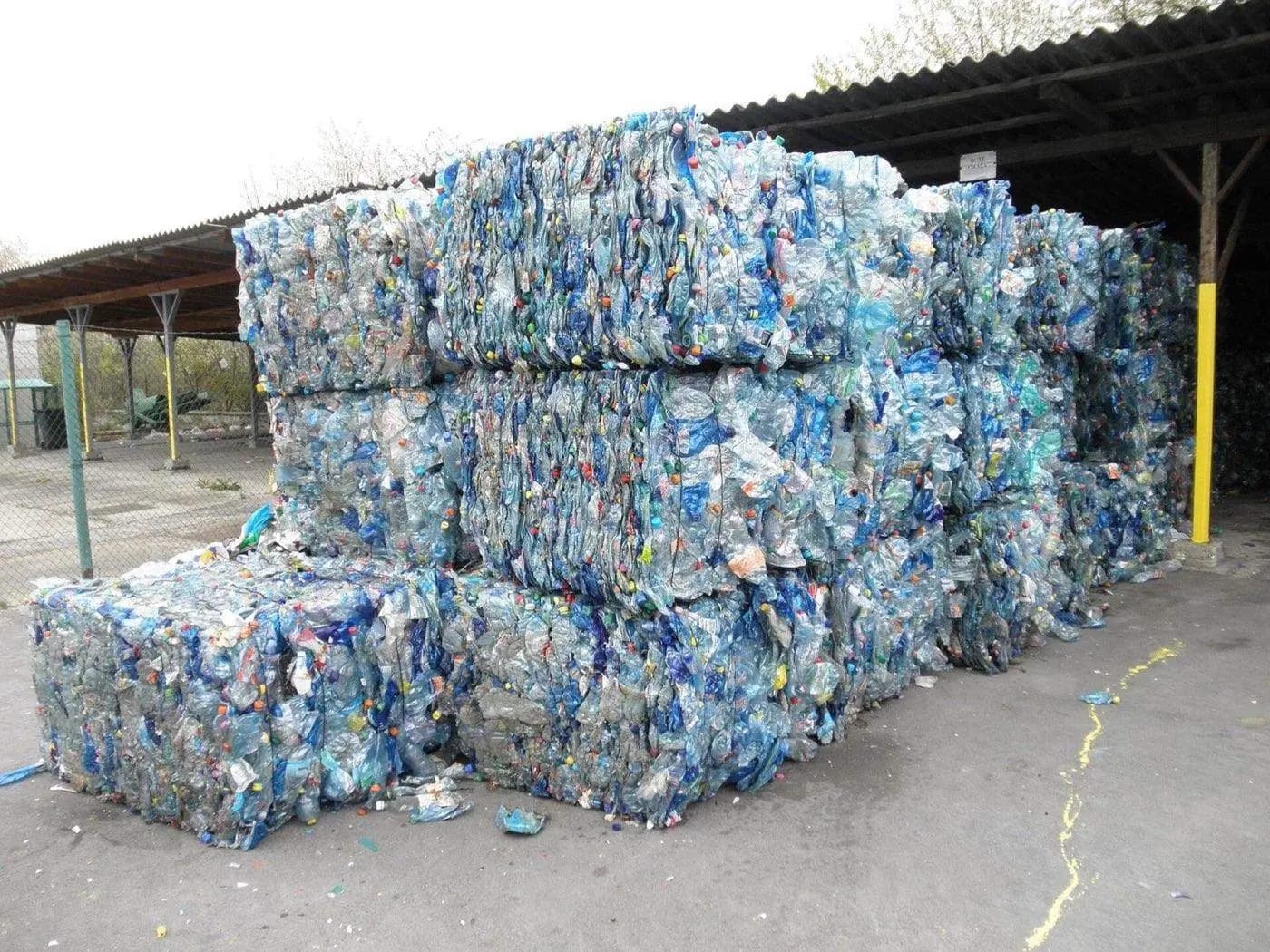
When a shop sells a "PET flag" or an "rPET flag", it usually means something narrower: polyester made from recycled plastic. An estimated 98% of all recycled polyester is made from PET bottles (Textile Exchange 2025). The bottles are sorted, cleaned, shredded, melted and spun into new yarn.
The result looks and flies like any polyester flag. It is printed the same way too, by dye sublimation.
02What changes when a flag is made of recycled PET?
Recycling changes where the plastic comes from. The fibre doesn't start as fresh oil, but as a bottle that has already been used once.
That saves something real. A peer-reviewed life cycle study of bottle-to-fibre recycling found that recycled PET fibre takes 40 to 85% less non-renewable energy to make than new PET fibre, and causes 25 to 75% less greenhouse gas (Shen et al. 2010). The range is wide because it depends on how you split the bottle's footprint between its first life and its second.
So if you ask which polyester costs less energy at the factory, recycled polyester wins. We're happy to say so. Whether a CiCLO® flag shares this advantage depends on the cloth: CiCLO® can be new or recycled polyester, with the CiCLO® additive built into the fibre. Recycling and CiCLO® solve different problems.
03What stays the same with a recycled polyester flag?
A bottle and a flag lead very different lives.
A bottle can go round in a closed loop. You drink from it, hand it in, and it can become a bottle again.
A flag is an open system. It doesn't wait until it is thrown away to lose material. It loses it while it works: every gust whips the cloth, sunlight makes the fibres brittle, and the fly end frays thread by thread. We call it environmental confetti.

Recycled polyester is still polyester. The fibres a PET flag sheds are the same plastic as the fibres from a new polyester flag. In independent ASTM lab tests in seawater, soil, landfill and sewage sludge, untreated polyester biodegraded only 0 to 6.2% after 952 to 1,362 days (CiCLO®). Polyester doesn't break down. It breaks up.
Recycling doesn't make a fabric shed less, either. In two peer-reviewed washing studies, fabric of recycled polyester released more fibres than fabric of new polyester: about 2.3 times as many in one (Özkan & Gündoğdu 2021), and 1,193 against 908 fibres in the other (Akyildiz et al. 2024). Those were washing machine tests, not flags on a pole. But we found no study in which recycled polyester shed less.
Recycling delays the problem. It doesn't solve it.
04What does the EU say about bottles in textiles?
The European Commission sees the same gap. In its EU Strategy for Sustainable and Circular Textiles (2022), it lists the accuracy of green claims about clothing made from recycled PET bottles, rather than old textiles, as a growing concern. Besides the risk of misleading buyers, the practice is "not in line with the circular model for PET bottles", which can stay in a closed loop as food packaging. And such claims face a further problem: synthetic fibres shed microplastics (European Commission 2022).
The bottle loop needs that plastic back. EU rules require 25% recycled plastic in PET drinks bottles from 2025, and 30% in all plastic drinks bottles from 2030 (European Commission).
The textile loop barely exists yet: less than 1% of textile waste worldwide is recycled into new textiles (European Commission 2022). A bottle that becomes a flag has, in all likelihood, left the loop for good.
05PET, rPET, CiCLO® or Hemptex®: how do they compare?
| Material | Made of and print | Sheds while flying | What tests show at the end |
|---|---|---|---|
| Standard polyester | New polyester (PET), made from oil. Print: dye sublimation. | Plastic fibres | Untreated polyester: 0 to 6.2% biodegraded after 952 to 1,362 days (ASTM lab tests) |
| rPET | Polyester (PET) from recycled plastic, mostly drinks bottles. Print: dye sublimation. | Plastic fibres; in two washing studies, more than new polyester | No separate tests; the same plastic as standard polyester |
| CiCLO® | New or recycled polyester with the CiCLO® additive built into the fibre, depending on the cloth. Print: dye sublimation. | Polyester fibres with the CiCLO® additive | 90 to 94.2% biodegraded after 952 to 1,362 days (ASTM lab tests) |
| Hemptex® | 55% hemp, 45% cotton. Print: water-based pigment inks, both sides. | Plant fibres; no plastic fibres | Plant fibres break down: cotton yarn biodegraded over 70% in lake water and sludge (lab study); the finished flag has not been tested |
The CiCLO® results per test: seawater (ASTM D6691-17) 94.2% after 1,362 days, landfill (ASTM D5511-18) 91.1% after 1,278 days, soil (ASTM D5988) 91.1% after 1,170 days, wastewater sludge (ASTM D5210-92) 90% after 952 days (CiCLO®). Lab tests recreate each environment; real conditions outside vary. The cotton figure comes from Zambrano et al. 2020.
06Which flag is really sustainable?
That depends on the problem you want to solve. Recycling deals with where the plastic comes from. What a flag sheds depends on what it is made of.
- No plastic fibres at all: choose Hemptex® (hemp flags). It is 55% hemp and 45% cotton, with no polyester, so the fibres it loses are plant fibres, not plastic. The print and the seams are part of the flag too, and the finished flag has not been tested for biodegradation.
- A flag that flies and prints like polyester: choose CiCLO® (biodegradable flags). On the pole it performs like any polyester flag. It is still polyester, new or recycled depending on the cloth, and it still sheds fibres while it flies. In the tests, those fibres broke down instead of staying.
- Whichever you choose: take it in during storms and from wind force 6, and trim loose threads at the fly end early. A small fray grows fast in the wind.
 Hemp flags55% hemp, 45% cotton. Sheds plant fibres, not plastic.See the hemp flags →
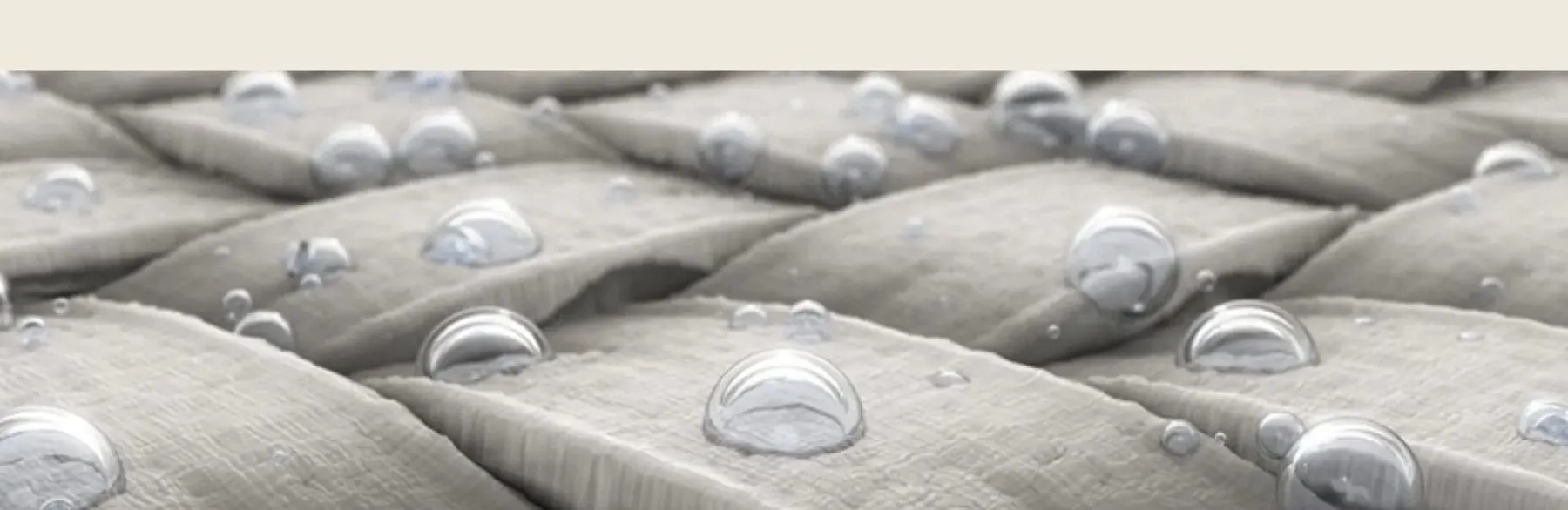
 Biodegradable flagsCiCLO® polyester: 90 to 94% biodegraded in ASTM lab tests.See the CiCLO® flags →
Every ready-to-buy design comes in both materials. For every flag material side by side, read The most sustainable flag. For what a flag sheds and what science has measured, read Do flags shed microplastics?
07Frequently asked questions
What is a PET flag?
A polyester flag. PET is the plastic of drinks bottles, and a flag sold as PET or rPET is usually made from recycled bottles.
Is a recycled polyester flag more sustainable than a normal polyester flag?
At the factory, yes: making fibre from bottles takes 40 to 85% less non-renewable energy and causes 25 to 75% less greenhouse gas. On the pole, no: it sheds the same plastic fibres, and in two washing studies recycled polyester even released more.
Does an rPET flag shed microplastics?
Yes. Recycled polyester is still plastic, so the fibres that come loose in the wind are microplastics, and in lab tests untreated polyester barely broke down.
What is the difference between rPET and CiCLO®?
rPET changes where the plastic comes from: old bottles instead of new oil. CiCLO® changes what happens to the fibres that come loose: in ASTM lab tests, CiCLO® polyester biodegraded 90 to 94.2% after 952 to 1,362 days, against 0 to 6.2% for untreated polyester. A CiCLO® cloth can itself be new or recycled polyester, so the two solve different problems.
Which flag sheds no plastic fibres?
A flag made only of natural fibres. Hemptex® is 55% hemp and 45% cotton with no polyester, so the fibres it loses are plant fibres.

Founder of Better Flags and Hemptex®. Hemptex® made the world's first hemp flag in 2019. Niek writes about what flags are made of, and what that means once they fly.
Follow Niek on LinkedIn ↗