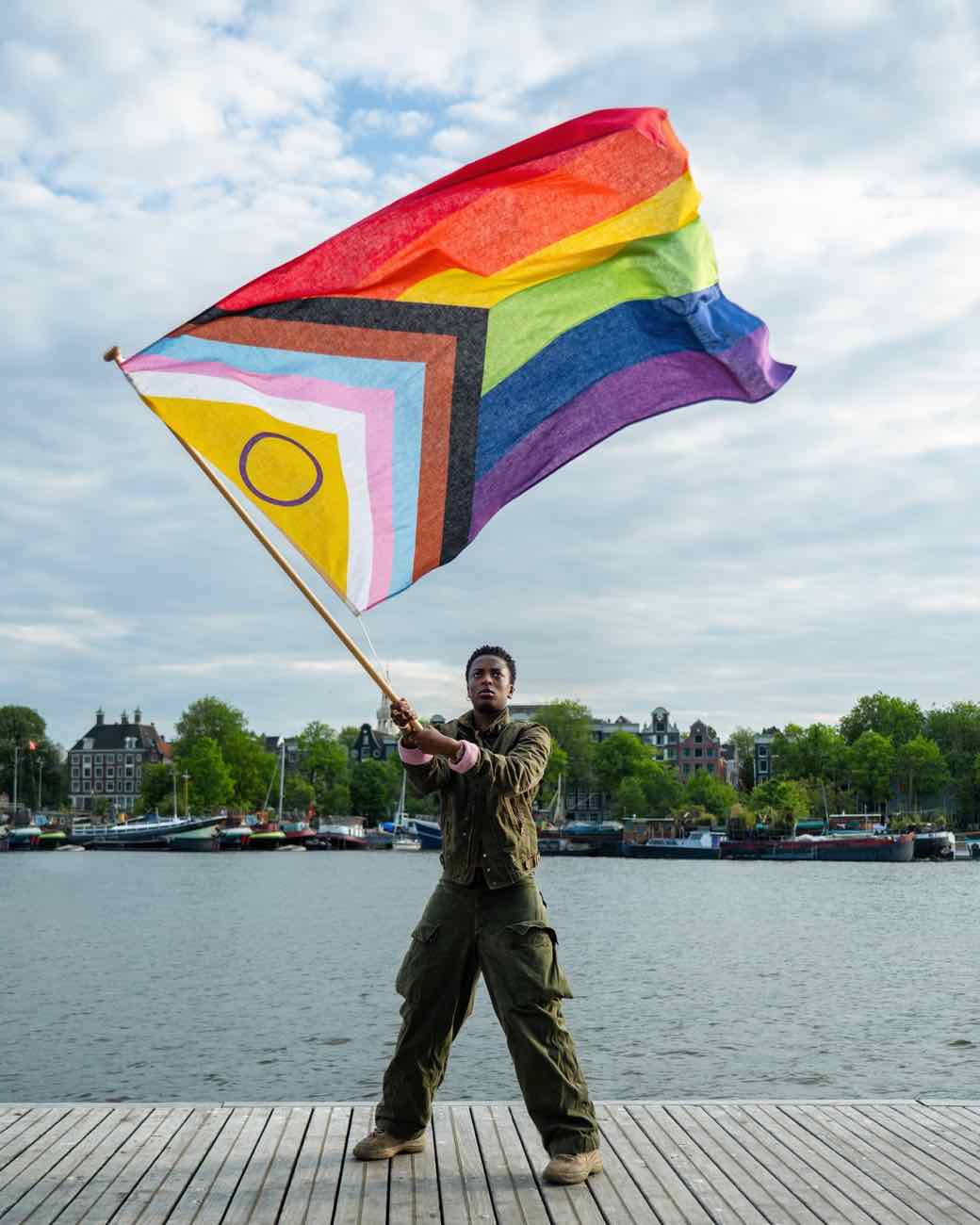
In 1978 the rainbow flag had eight stripes. Hot pink did not survive the first production run. Not for political reasons, but because the fabric could not be sourced at scale.
Gilbert Baker sewed the first rainbow flag in 1978. Eight colours, each with a meaning.
When the flag went into production, hot pink disappeared. Nobody objected to the colour. The fabric simply was not available in the quantities needed.
So the most recognisable symbol of the last fifty years is missing a stripe because of a textile problem.
Material was part of this story from day one. And then, for roughly five decades, nobody thought about it again.
The Problem: A Promise Made of Plastic
Most flags say something simple. This is where I live. This is who governs here.
The Pride flag does something else. It says you are safe here. It is a promise that we look after each other.
And we mass produce that promise in cheap polyester that fades in a single summer and then outlives everyone who marched under it.
That is a contradiction worth fixing.
The Rainbow Is the Hardest Test in the Business
Ask any flag maker which colours give them the most trouble outdoors. The answer is almost always red and purple.
Those are the first pigments to break down under UV. A cheap rainbow flag goes from vivid to pastel in one northern European summer. Red drifts to pink. Purple turns a washed out grey blue.
A flag about being seen becomes literally harder to see.
Hemptex® holds colour longer because the fibre handles UV better than standard polyester. Your rainbow stays a rainbow.
Where It Goes Next
Pride flags have brutally short working lives. A month on the pole. Sometimes a single parade.
Then most of them go in the bin.
And here is the part almost nobody thinks about. While that flag is flying, it is shedding. Every gust pulls fibres loose. Synthetic textiles are a major contributor to the microplastics in our oceans, and a flag is a piece of synthetic textile that we deliberately hang outside, in the wind, in the rain, in full sun, for as long as we can.
Polyester does not break down. It breaks up. Into pieces small enough to end up in the canal, the sea, and eventually in us.
We call it environmental confetti. A symbol of care for people, quietly littering the place those people live.
That is why we started Better Flags.
The Fix: Two Materials, One Idea
🌱 Hemptex®
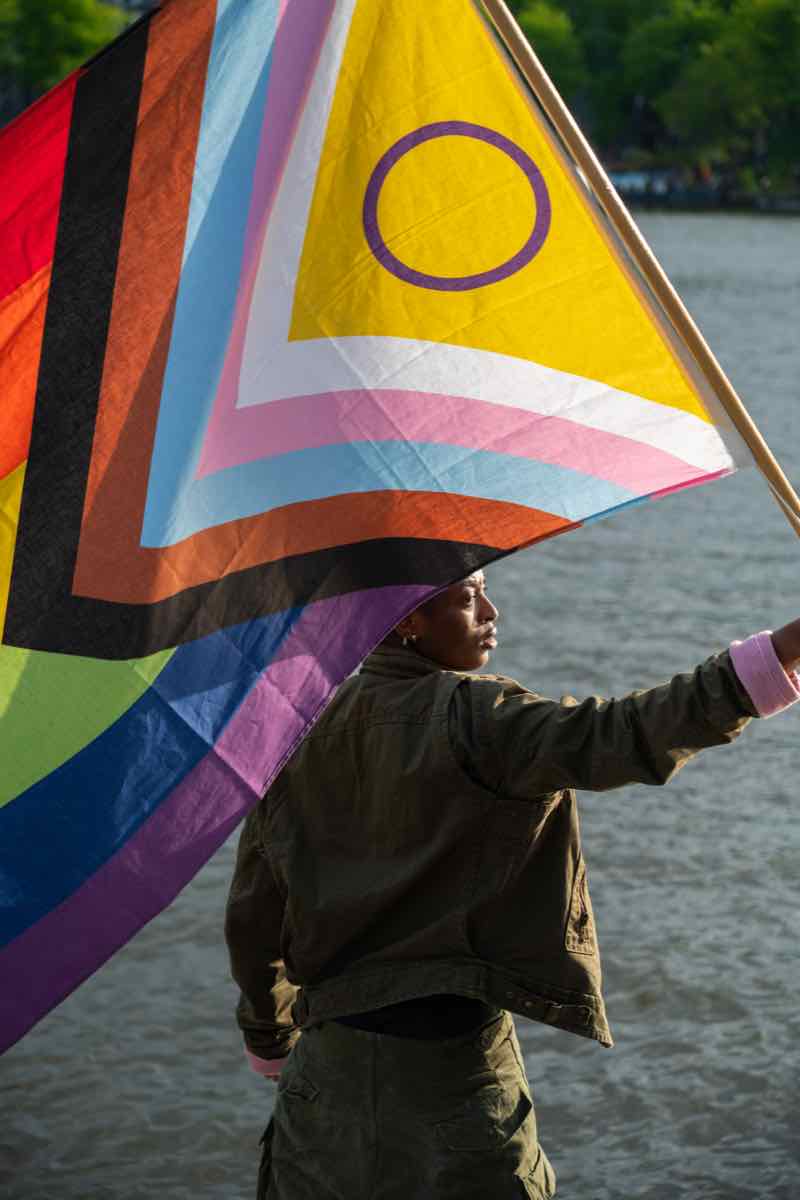
We are the only company in the world making flags from this completely natural material. Higher UV resistance, so the colours last. Printed and finished in the Netherlands at Hollanders Printing Solutions, who make it possible to print double sided with pigment on hemp textile.
♻ CiCLO®Textiles
A polyester that biodegrades up to 98% within four years in a natural environment. Without leaving a single microplastic behind. How cool is that.
Two very different materials, one rule. The flag leaves no trace.
Which Flag Material Is Actually the Most Sustainable?
Here is the honest comparison, including the option most suppliers will try to sell you as the green choice.
| Flag material | Made from | Sheds microplastics | Biodegrades | UV colour hold |
|---|---|---|---|---|
| Standard polyester | Virgin fossil oil | Yes, for centuries | No | Low |
| rPET, recycled polyester | Recycled bottles | Yes, for centuries | No | Low |
| CiCLO® | Polyester with a biodegradable additive | Fragments biodegrade | Up to 98% in about 4 years | Same as polyester |
| Hemptex® | Hemp plant fibre | No plastic to shed | Yes, it is a natural fibre | Higher |
Recycled polyester reuses a bottle once. It does not stop the flag shedding, and it does not biodegrade at the end. That is why we do not sell it.
We took that comparison apart in detail in rPET versus CiCLO.
The Flag Keeps Evolving. The Fabric Should Too.
Eight stripes in 1978. Then six.
In 2018 Daniel Quasar added the chevron, bringing in people of colour and the trans community.
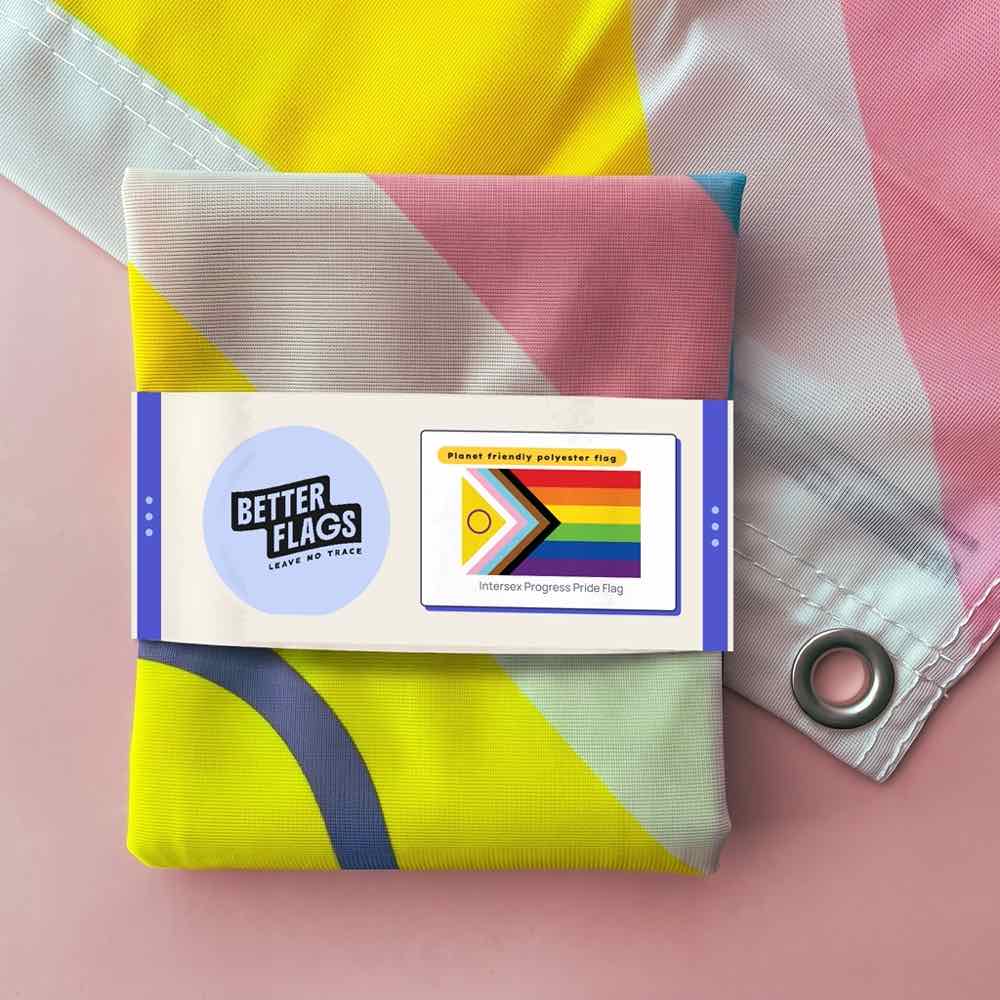
In 2021 Valentino Vecchietti added the intersex circle, the symbol Morgan Carpenter designed in 2013.
This flag is never finished. It gets redrawn every time the movement decides more people belong inside it.
A symbol that keeps improving deserves a fabric that does the same.
Redesigning the flag to include more people, then printing it on a material that pollutes the world those people live in, misses the point by a wide margin.
Sustainable Pride Flags: Common Questions
What is a sustainable Pride flag?
A sustainable Pride flag is one made from a material that does not leave plastic behind. In practice that means either a natural fibre such as hemp, or a polyester engineered to biodegrade, such as CiCLO®. A standard polyester Pride flag is not sustainable, because it sheds microplastics the entire time it flies and does not break down afterwards.
What is a biobased Pride flag?
A biobased Pride flag is made from fibre grown as a plant rather than refined from oil. Hemp is the strongest option for flags, because it is naturally UV resistant, needs very little water, requires no chemicals and stores CO2 in the soil while it grows. Better Flags is the only company in the world making Pride flags from Hemptex®, a fully natural hemp textile.
What is a CiCLO® flag?
A CiCLO® flag is made from polyester that contains a biodegradable additive. The additive lets the fibre break down in a natural environment up to 98% within about four years, instead of persisting as microplastic. You get the performance of polyester without the permanent pollution.
Is a recycled polyester (rPET) Pride flag sustainable?
Not really. rPET reuses a plastic bottle once, but the resulting flag still sheds microplastics while it flies and still does not biodegrade at the end of its life. Recycling delays the problem, it does not solve it.
What is the most sustainable flag material?
For most outdoor flags, hemp. It is a natural fibre, so there is no plastic to shed, it biodegrades at end of life, and it holds colour better under UV than standard polyester. Where polyester performance is genuinely required, CiCLO® is the most sustainable polyester option.
Do flags really shed microplastics?
Yes. Synthetic textiles are a major contributor to the microplastics in our oceans, and a flag is a piece of synthetic textile deliberately hung outdoors in wind, rain and full sun for as long as possible. Every gust pulls fibres loose. We call the result environmental confetti.
How long does a hemp Pride flag last outdoors?
Longer than a cheap polyester one in terms of colour, which is the part that usually fails first. Red and purple are the first pigments to break down under UV, and those are exactly the colours a rainbow flag cannot afford to lose. Hemptex® holds them longer.
Ten Left in Each Size
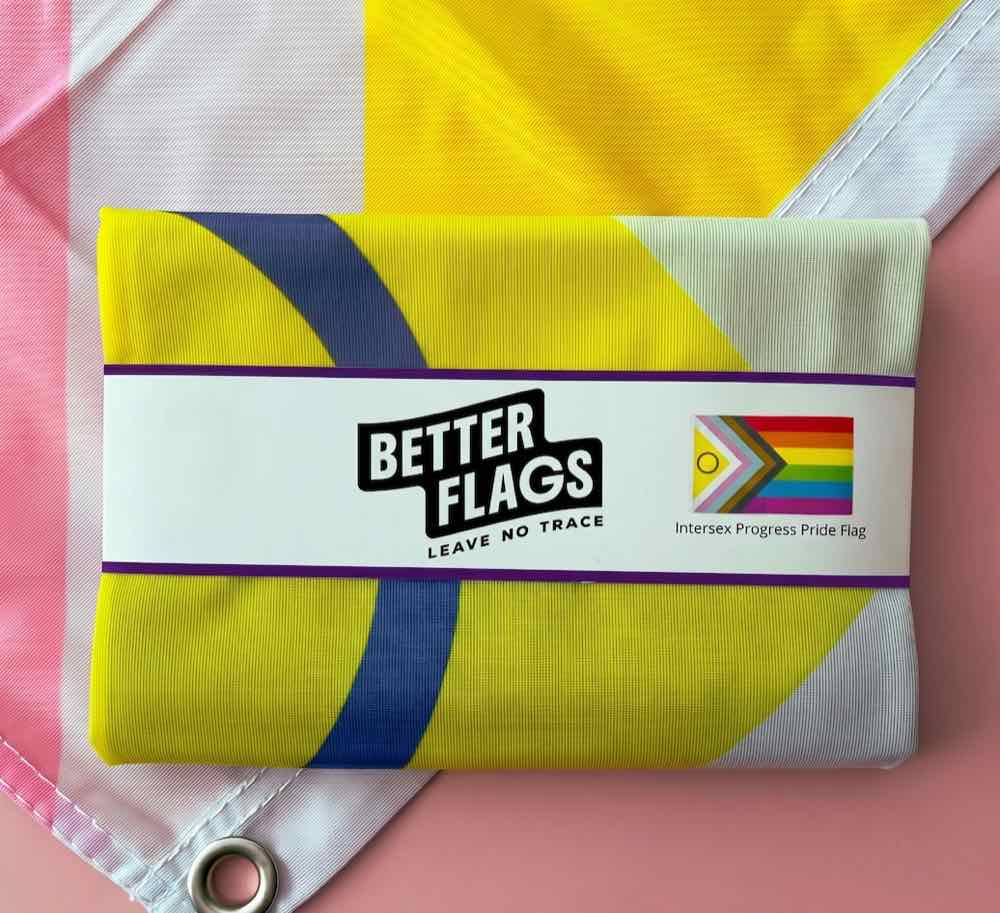
We made the Intersex Progress Pride flag the way it should be made. Ten left at 100 x 150 cm, ten left at 60 x 90 cm.
Ready to fly a flag you can actually be proud of?
Order yours today 👇