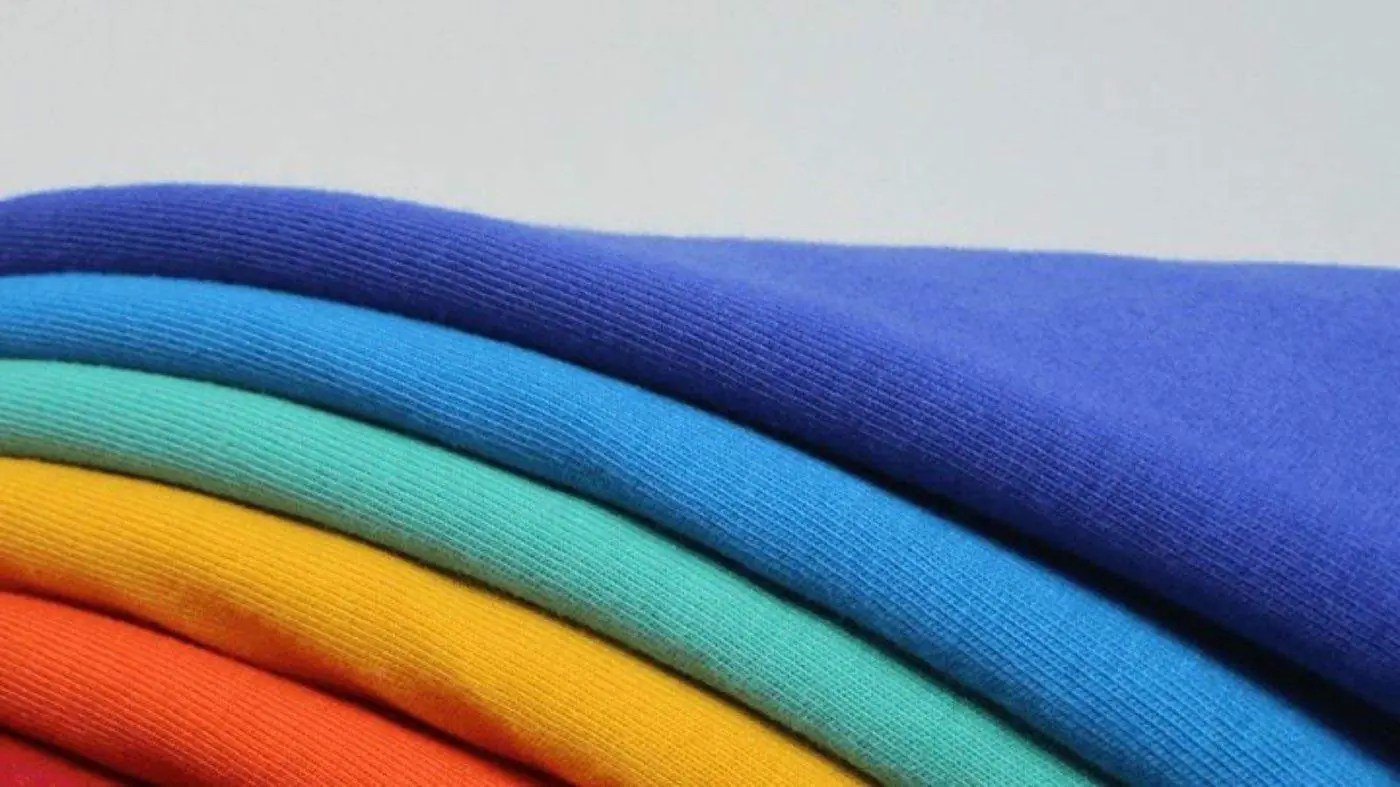
Most flags are knitted polyester of about 110 g/m²: light and cheap, but it sheds plastic fibres that stay. Spun polyester, nylon and recycled polyester (rPET) are plastic too. Cotton and hemp are plant fibres. CiCLO® is polyester whose fibres biodegraded 90 to 94% in ASTM lab tests. The best choice depends on wind, print and what you leave behind.
Key facts
- 59%
of all fibre made worldwide in 2024 was polyester; nylon 5%, cotton 19%. About 12% of polyester was recycled, and 98% of that came from plastic bottles (Textile Exchange 2025).
- 110 g/m²
Standard knitted flag cloth (Georg+Otto Friedrich). A finished Hemptex® flag weighs 150 g/m², and our CiCLO® cloth 110 g/m².
- 94.2%
CiCLO® polyester biodegraded that much in seawater (ASTM D6691-17) in 1,362 days, against 3.8% for untreated polyester (CiCLO®).
- 7-8 to 8
Blue Wool lightfastness (ISO 105-B02) of our pigment inks, in every colour, measured on cotton. Disperse inks for polyester, measured on polyester: 3-4 to 7 (Hollanders ink data sheets).
01What are flags made of?
Flags come in two families. Synthetic fibres, polyester and nylon, are plastic made from oil. Natural fibres, cotton and hemp, grow in fields.
Polyester rules the flagpole: dye sublimation, by far the most common way to print flags, carries the colour into polyester fibres (Georg+Otto Friedrich).
02What the weight in g/m² tells you
In Europe, flag cloth is sold by weight in grams per square metre: g/m² or gsm. It tells you how a flag flies.
Light cloth lifts in a light breeze. Heavier cloth needs more wind and hangs more calmly (Georg+Otto Friedrich).
Whatever the weight, Dutch wind wins in the end. Take any flag in from wind force 6: 39 to 49 km/h, when you can barely hold an umbrella (KNMI).
03Seven flag fabrics, one by one
Knitted polyester flag cloth
Polyester yarn knitted into a light, open cloth of about 110 g/m²: the standard for printed flags, beach flags and feather flags (Georg+Otto Friedrich).
It lifts easily and dries fast after rain. It is printed by dye sublimation on one side, and the design shows through to the back in mirror image.
It sheds plastic microfibres. In a clothing study, knitted fabrics and short-fibre yarns shed more, to the air and in the wash, than tightly woven filament cloth (De Falco et al. 2020). UV light breaks polyester fibres into fragments (Sait et al. 2021). We call it environmental confetti.
Polyester doesn't break down. It breaks up.
In the CiCLO® lab tests, untreated polyester biodegraded 0 to 6.2% (CiCLO®).
Spun polyester
Polyester cut into short fibres, spun into yarn and woven into a heavier cloth that looks more like cotton. Heavy polyester cloths are used for national flags and for screen printing (Georg+Otto Friedrich).
It needs more wind and hangs more calmly. It takes screen print or sublimation. It sheds the same plastic, and short-fibre yarns shed more in the clothing study above.
Recycled polyester (rPET)
Polyester made from recycled plastic, sold as rPET or PET flag. Of all recycled polyester, 98% is made from plastic bottles; less than 1% of all fibre comes from recycled textiles (Textile Exchange 2025).
On the pole it is standard polyester. Our cloth supplier's recycled flag cloth has the same 110 g/m² and takes the same print; its whiteness varies from lot to lot (Georg+Otto Friedrich).
It sheds the same fibres, and they persist like any polyester. Recycling delays the problem. It doesn't solve it. More in PET flag: recycled or biodegradable?
Nylon
Polyamide: a synthetic fibre made from oil, strong and supple, with a slight sheen. Nylon cloth is light and lifts easily. It takes its own inks, so ask for their Blue Wool rating.
In tests, sunlight hit nylon harder than polyester. In a 10-month lab study, UV broke both polyester and nylon fibres into fragments, and the nylon also changed chemically (Sait et al. 2021). In a 2026 study of fish-farm nets in sunlight and UV, nylon lost the most weight; polyester held up better (Marine Pollution Bulletin, 2026). UV additives can shift the balance, so ask for test data on the cloth itself.
Cotton
A plant fibre that takes up rain: a wet cotton flag gets heavier and dries slowly. Stored damp, it can get mildew.
The fibres it sheds are plant fibres. In a lab study, cotton yarn biodegraded more than 70% in lake water and sludge and about 50% in seawater, while polyester did not appreciably degrade (Zambrano et al. 2020). The authors call that a potential, not a promise for nature. Typical use: indoor and ceremonial flags.
Hemp: Hemptex®
Hemptex® hemp is 55% hemp and 45% cotton, 150 g/m² as a finished flag. No polyester, no plastic fibres. Hemptex® made the world's first hemp flag, in 2019. Hemp fibre is very similar to linen (European Commission).
It is heavier than polyester flag cloth: it needs a little more wind to unfurl and moves more calmly. Hoist it dry if you can. Hollanders Printing Solutions prints it in the Netherlands on both sides with water-based pigment inks, and each side can carry its own design.
The fibres a hemp flag loses are plant fibres, not plastic. The print and the seams are part of the flag too, and the finished flag has not been tested for biodegradation. More on our hemp flags page.
CiCLO® polyester
New or recycled polyester, depending on the cloth, with the CiCLO® additive built into the fibre while it is made: not a coating. We use 110 g/m² CiCLO® polyester, printed by dye sublimation. Our CiCLO® flags are made in Belgium, the Netherlands or China, depending on the production route. Those made in Europe use CiCLO® cloth from Georg+Otto Friedrich in Germany, a licensed CiCLO® fabric maker.
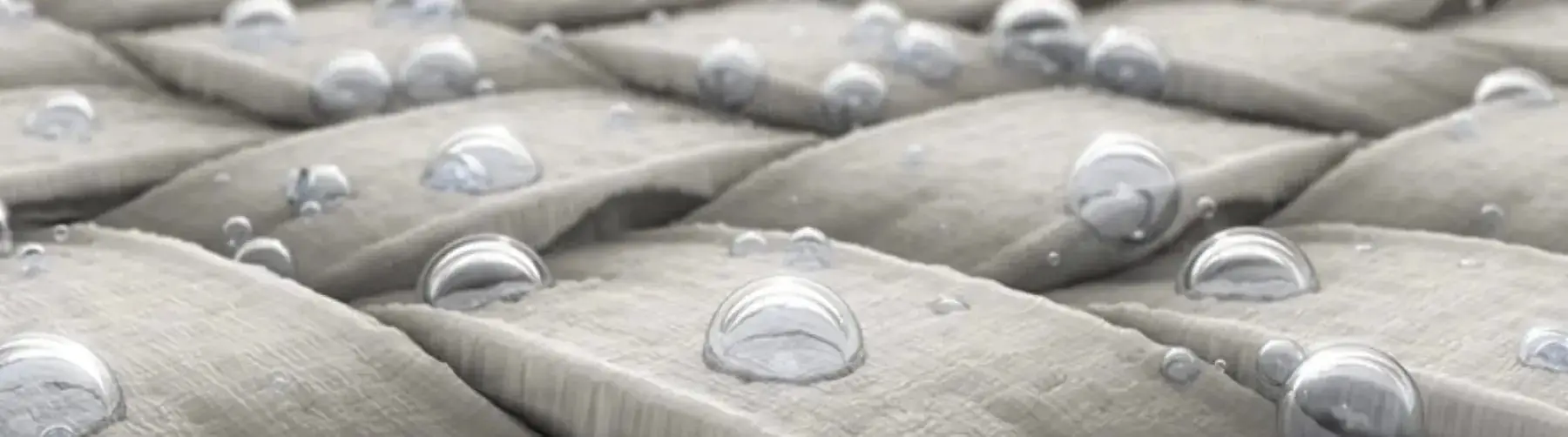
On the pole it performs like any polyester flag and lasts as long as a conventional polyester flag. It still sheds fibres while it flies. In independent ASTM lab tests, CiCLO® polyester biodegraded 90 to 94% after 952 to 1,362 days, while untreated polyester reached 0 to 6.2% (CiCLO®). Lab tests recreate each environment; real conditions outside vary. The full results are on our biodegradable flags page.
04How well does the colour hold?
Sun fades every flag. What you can compare is the ink, rated for lightfastness on the Blue Wool scale of 1 to 8 (ISO 105-B02). Each step roughly doubles the light a colour can take (Kanani Pigment).
Our pigment inks rate 7-8 to 8 on the Blue Wool scale of 1 to 8 for lightfastness (ISO 105-B02), in every colour, measured on cotton, a natural fibre. The disperse inks used for polyester flags, measured on polyester, rate 3-4 to 7, with red at 5 and black at 5-6. For red and black that is two to three steps: about 4 to 8 times as much light.
05All seven flag materials compared
| Material | Fibre and weight | In the wind and print | Typical use |
|---|---|---|---|
| Knitted polyester | Polyester, from oil. About 110 g/m². | Light, lifts easily, dries fast. Dye sublimation, one side, mirrored on the back. | Printed flags, beach and feather flags |
| Spun polyester | Polyester, short-fibre yarn. Heavier than 110 g/m². | Needs more wind, hangs calmly. Screen print or sublimation. | National and heavy-duty flags |
| rPET | Polyester, 98% from bottles. About 110 g/m². | As knitted polyester. Dye sublimation. | As knitted polyester |
| Nylon | Polyamide, from oil. Weight varies. | Light, supple. Inks made for nylon. | Light outdoor flags |
| Cotton | Plant fibre. Weight varies; heavier when wet. | Needs more wind, dries slowly. Pigment inks or dyes. | Indoor and ceremonial flags |
| Hemptex® | 55% hemp, 45% cotton. 150 g/m². | A little more wind, moves calmly. Pigment, both sides. | Ready-to-buy and custom flags |
| CiCLO® | New or recycled polyester with the CiCLO® additive, depending on the cloth. 110 g/m². | As any polyester flag. Dye sublimation. | Wherever polyester flags fly |
| Material | Colour data (Blue Wool, ISO 105-B02) | What it sheds | End of life |
|---|---|---|---|
| Knitted polyester | Disperse inks: 3-4 to 7 (red 5, black 5-6) | Plastic microfibres | Persists: 0 to 6.2% in lab tests |
| Spun polyester | Depends on the ink: ask | Plastic microfibres | Persists |
| rPET | Disperse inks: 3-4 to 7 | Plastic microfibres | Persists, like new polyester |
| Nylon | Ask for the rating | Plastic microfibres | Persists |
| Cotton | Depends on the ink: ask | Plant fibres | Cotton yarn: over 70% biodegraded in a lab study |
| Hemptex® | Pigment inks: 7-8 to 8 (measured on cotton) | Plant fibres | Natural fibres; finished flag not tested |
| CiCLO® | Disperse inks: 3-4 to 7 | Polyester fibres | 90 to 94% in ASTM lab tests, 952 to 1,362 days |
06Which flag material should you choose?
Start with what you want to leave behind.
- The lightest flag at the lowest price: knitted polyester. Its fibres stay.
- No plastic fibres at all: Hemptex®, with a little more wind and three weeks for a custom order.
- Polyester performance with a better ending: CiCLO®, custom in 5 working days.
- rPET: a better start, the same ending.
 Hemp flags55% hemp, 45% cotton. Sheds plant fibres, not plastic.See the hemp flags →
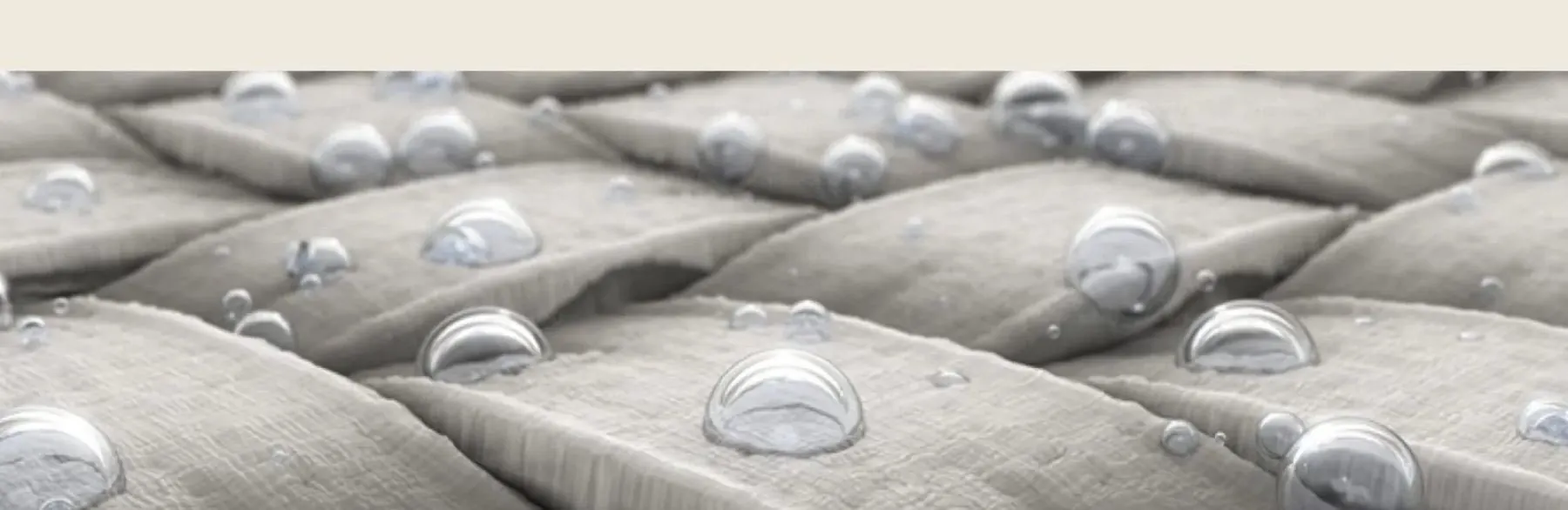
 Biodegradable flagsCiCLO® polyester: 90 to 94% biodegraded in ASTM lab tests.See the CiCLO® flags →
Comparing our two materials for your use: Hemp vs polyester flag. Weighing every material on what it leaves behind: The most sustainable flag. Your own design in either material: custom flags.
07Frequently asked questions
What is the best fabric for an outdoor flag?
Knitted polyester of about 110 g/m² is the standard: light, bright and quick to dry, but its fibres stay. For no plastic fibres, choose a natural fibre such as Hemptex® hemp. For polyester whose fibres biodegraded 90 to 94% in ASTM lab tests, choose CiCLO®.
Is nylon or polyester better for a flag?
Both are plastic made from oil, and both shed microfibres. In lab tests with sunlight and UV, nylon changed more than polyester, though UV additives can shift the balance. Ask for test data on the cloth itself.
Is recycled polyester (rPET) better than normal polyester?
It saves new oil at the start, since 98% of recycled polyester is made from plastic bottles. On the pole and at the end it is the same polyester: it sheds the same microfibres, and they persist.
Can a flag be printed on both sides?
Yes. A sublimation-printed polyester flag is printed on one side and shows the design mirrored on the back, unless the cloth has a blocking middle layer. Hemptex® is printed on both sides, and each side can carry its own design.

Founder of Better Flags and Hemptex®. Hemptex® made the world's first hemp flag in 2019. Niek writes about what flags are made of, and what that means once they fly.
Follow Niek on LinkedIn ↗